
Safety & service
Respecting property at every delivery stop
Delivery brings a driver into someone else’s space. Respect for that space shows up in small decisions: confirming the entrance, following authorized instructions and recognizing when a request needs clarification.
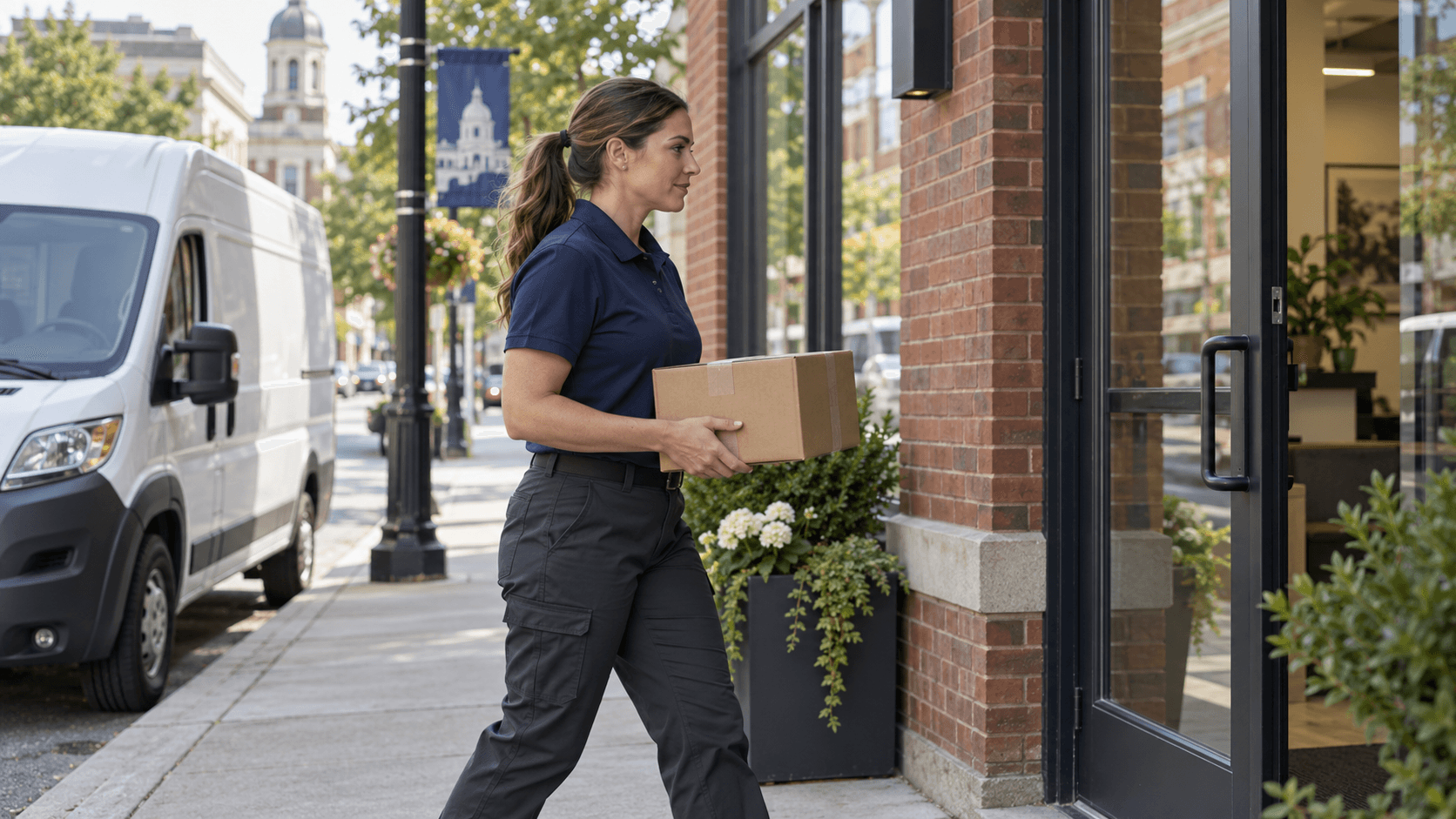
Confirm the intended entrance
A building can have more than one door, receiving area or unit. Use the address and authorized instructions to identify the correct destination. Do not treat a convenient entrance as an automatic substitute for the one specified.
If the details conflict, use the supporting team’s process to resolve the question. Clear identification helps prevent a package from reaching the wrong unit or an area where the intended recipient would not expect to find it.
Respect shared spaces and boundaries
Apartment buildings, offices and commercial properties may have access rules that are different from a single-family home. Follow the location’s authorized receiving process and your role’s delivery instructions.
Avoid assuming that an open gate or door grants access to a restricted area. If the assigned delivery cannot be completed through an authorized route, report the access issue. An improvised entry can create confusion for the recipient and the people responsible for the property.
Respond to the conditions you find
A familiar stop may have new construction, an obstruction or an animal near the approach. Follow your training and do not continue into an unsafe situation simply because the address has been straightforward before.
Explain the actual condition when asking for guidance. A useful description helps the team understand why a normal delivery approach may not work today. The customer’s preferred placement and the circumstances at the stop both need to be considered through the approved process.
Leave an accurate record of the outcome
Complete the delivery or exception record according to what occurred. If you were directed to a different authorized receiving point, use the applicable instructions for documenting it. Avoid notes that imply access or a handoff you did not have.
Respect continues after the stop. Use customer and location information only through the approved work channels. Professional delivery leaves the property and the record in a condition that makes sense to the next person involved.