Safety & service
Protecting Pedestrians Around Delivery Trucks
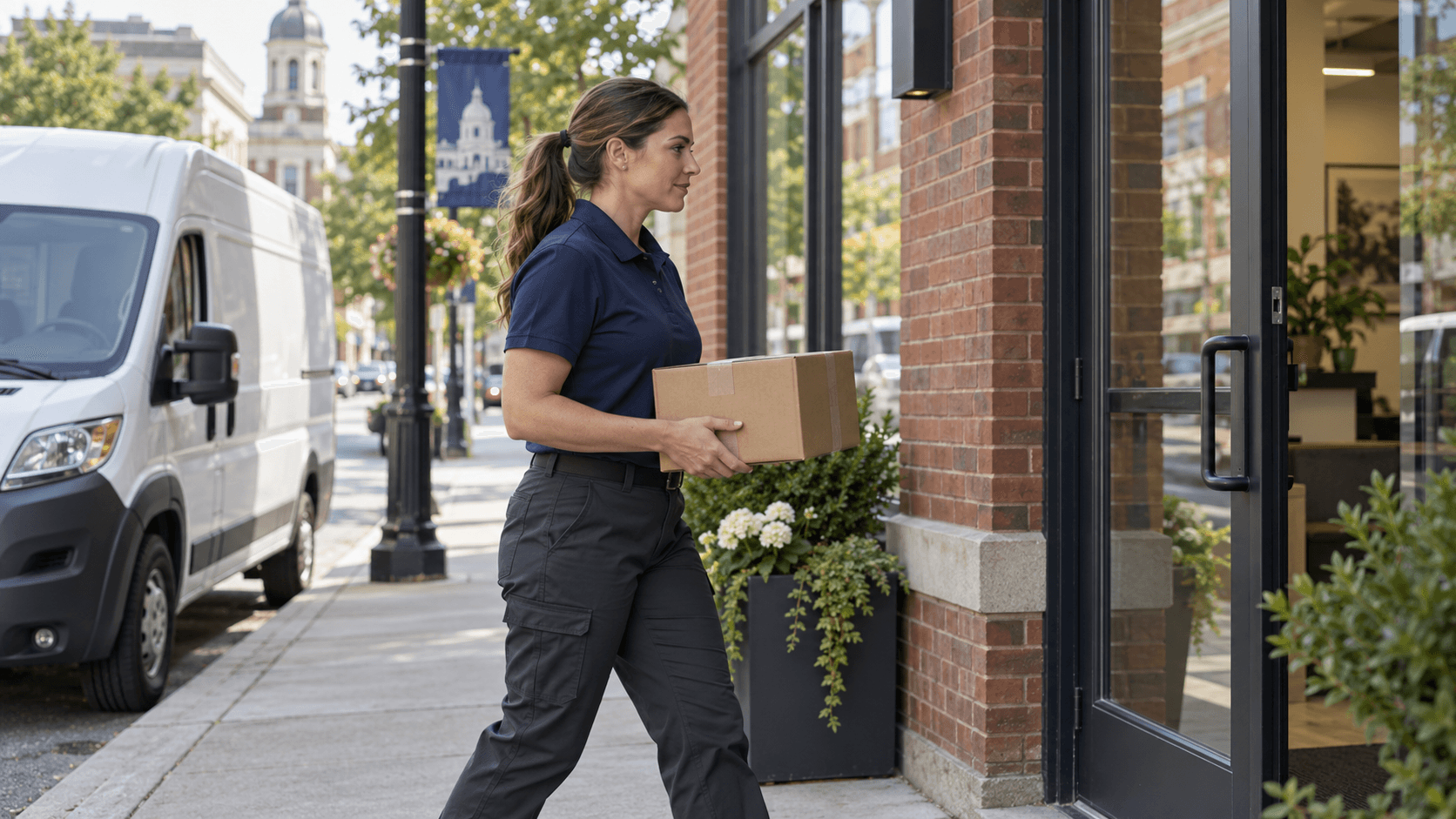
A person on foot has no vehicle body to absorb a driving mistake. Delivery work brings trucks close to pedestrians throughout the day: outside homes, beside loading areas, near school crossings, and in parking lots. The driver’s task is to anticipate people before they become an emergency. That includes people who are distracted, hidden, moving slowly, or crossing somewhere unexpected.
Search the places where people can appear
Scan sidewalks, driveways, parked vehicle gaps, transit stops, and building entrances as part of the approach. A pedestrian may be obscured by a hedge or the truck’s own windshield pillar. Shift your viewing position as needed to check those blind areas while keeping the vehicle controlled.
NHTSA identifies turning, backing, and passing a vehicle stopped for a pedestrian as common crash situations. 1 A stopped car near a crossing is a reason to look for the person it may be protecting. Do not pass it to preserve momentum. Slow early enough that discovering a pedestrian does not require an emergency maneuver.
Give a crossing more than a quick glance
Before turning, check the crosswalk and the sidewalk leading toward it. A person may begin crossing after the driver’s first look. Continue scanning through the turn, balancing mirror checks with the view of the path ahead. A green traffic indication does not remove the need to yield to pedestrians as required.
Allow extra time for children, older adults, and people using mobility aids. Do not assume that someone can move faster because the truck is waiting. Eye contact can help communication, but it does not prove the person sees the whole situation or will respond as expected. Keep the vehicle stopped until the path is safely clear.
Protect the space around a parked truck
Choose a lawful parking position that preserves pedestrian routes, curb ramps, and visibility as much as possible. A truck parked across a sidewalk can force someone into traffic. A large vehicle immediately beside a crossing can also hide a person from approaching drivers.
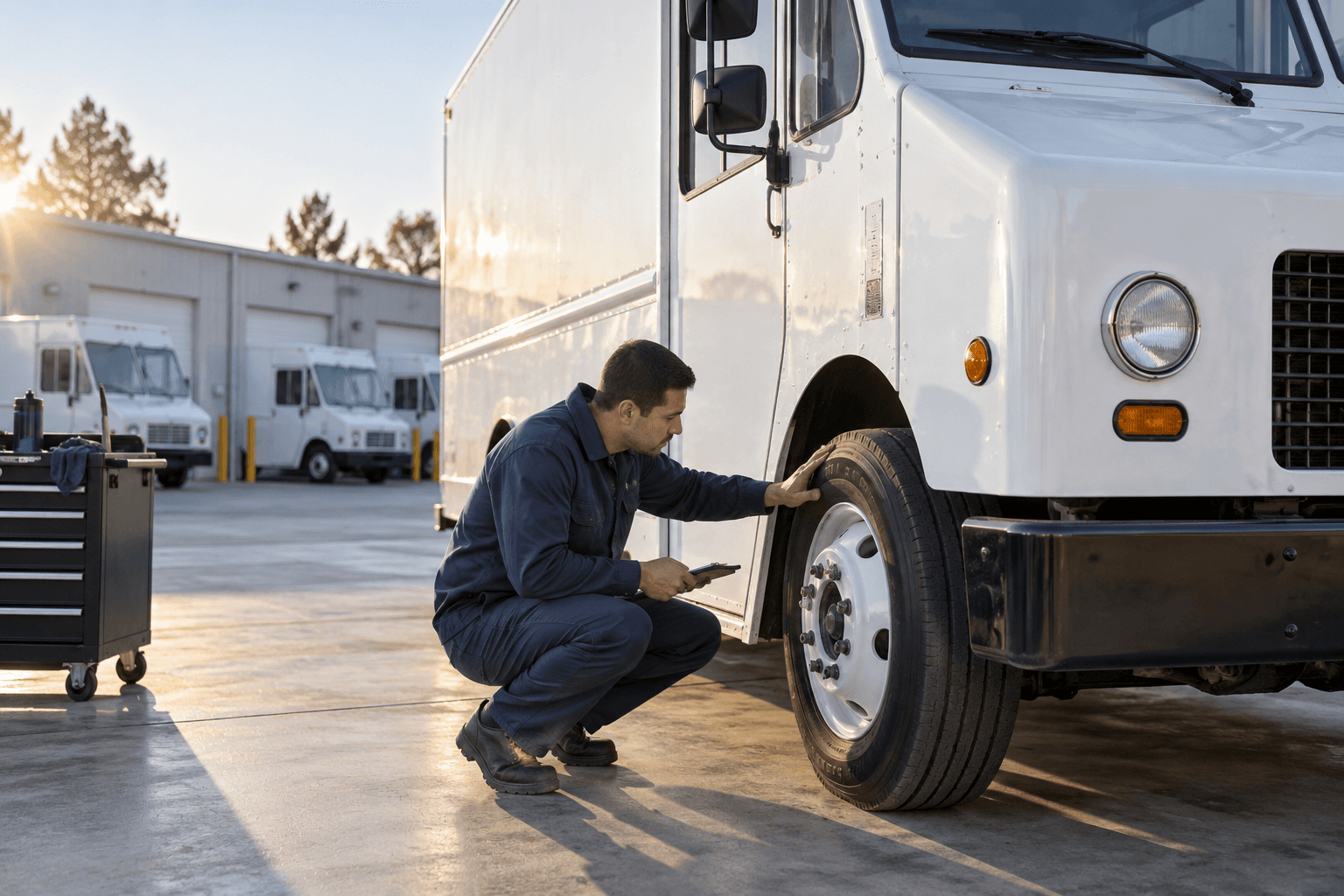
Before moving away, inspect the surroundings again. The scene may have changed while the driver was delivering the package. Children may have approached, a customer may be standing near a door, or someone may be passing behind the truck. Mirrors and cameras help, but they do not eliminate blind spots. FMCSA cautions that large vehicles have substantial areas where other road users are difficult to see. 2
Make backing and poor visibility reasons to pause
Plan parking to reduce backing whenever a safe lawful forward departure is available. If reversing is necessary and permitted, check the area, use trained assistance when available, and stop immediately if the path or spotter becomes uncertain. Never continue because a person was clear of the truck a moment earlier.
Rain, darkness, and glare make pedestrians harder to detect. Reduce speed to match the actual view, and maintain lights, windows, mirrors, and camera lenses. For a delivery driver in Pittsburgh, narrow streets and parked vehicles can make patient observation especially valuable.
Sigma Continental encourages treating the area around the truck as a changing shared space. The final check before movement should answer a simple question: where could a person be that I have not yet seen? If the answer is an unchecked area in the vehicle’s path, resolve that uncertainty before releasing the brake.
Sources and further reading
Review current guidance and follow the training and procedures provided for your role.
- Original Safety Articles collection
- NHTSA — Pedestrian Safety
- FMCSA — Tips for Truck and Bus Drivers